

Rodrigo’s Shadow
Is Duterte’s fate a warning to Trump?

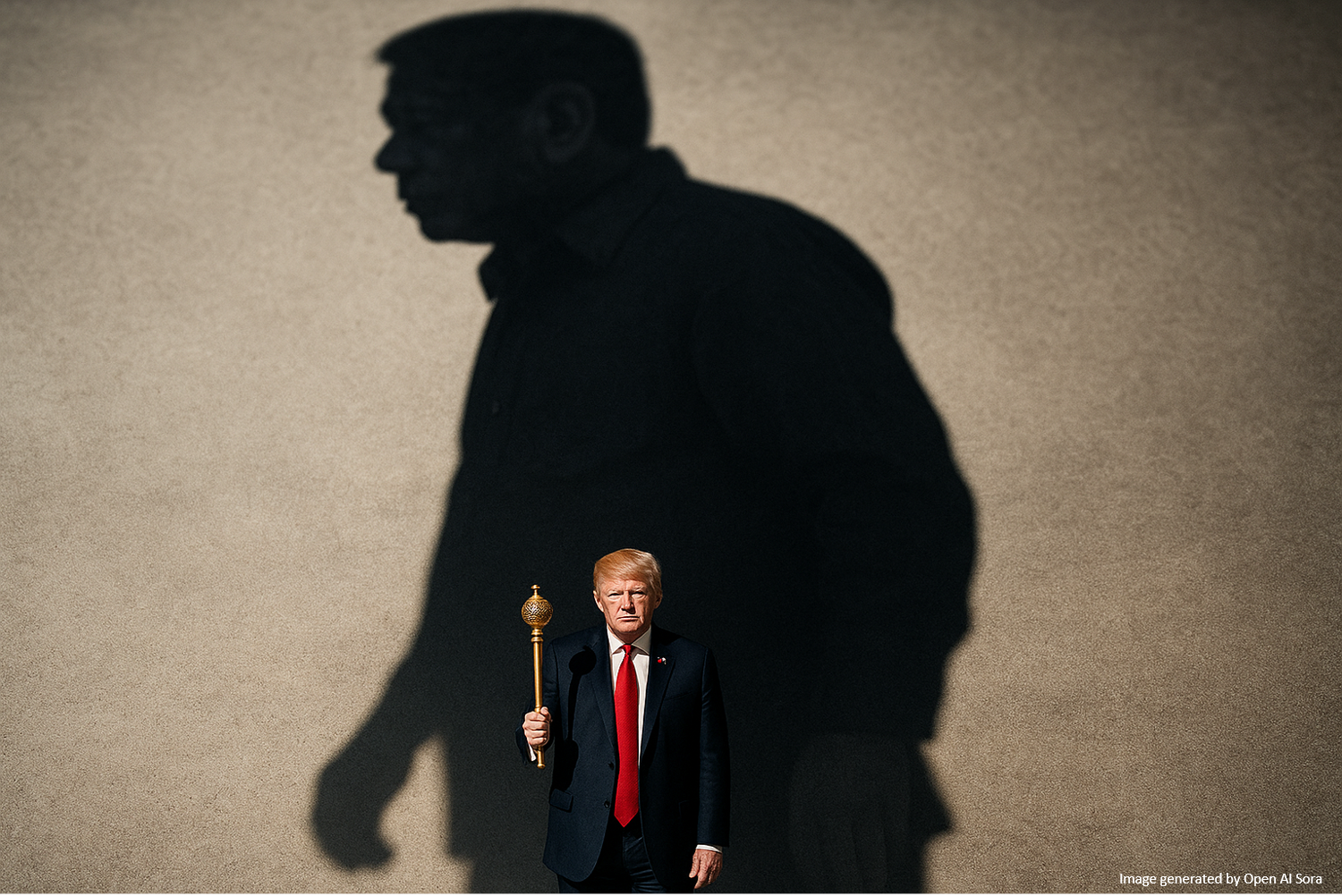
The Master
“(T)he incidents described in the Application amount to crimes against humanity,” reads the Arrest Warrant. The defendant “intended the conduct to be part of the widespread and systematic attack directed against all persons designated as involved in criminal activities, especially drug- related ones.”
The Court added, “the elements of the crimes against humanity of murder … are met…”
Earlier, the Charging Document alleged the defendant used his authority for “Designing and disseminating the policy to ‘neutralise’ alleged criminals.” It accused him of “Instructing and authorising violent acts including murder to be committed against alleged criminals, including alleged drug dealers and users,” of “Providing personnel and other necessary logistical resources such as weapons including those to be used in the execution of the crimes,” and “Making public statements authorising, condoning and encouraging killings of alleged criminals.”
The Charging Document identified 76 individual victims of the homicidal campaign, but added there were “thousands of other murders.”
The defendant is former Philippines President Rodrigo Duterte. The Court is the International Criminal Court (ICC). Duterte, who is currently under arrest, “could face up to 30 years or life imprisonment if convicted,” according to the Malaysia National News Agency.
The Apprentice
If Duterte is a master of crimes against humanity, Donald Trump is the apprentice.
“Trump repeatedly praised Philippine President Rodrigo Duterte, calling him by his first name, sharing a joke about the media and even complimenting Manila’s weather,” reported PBS in 2017. “What he did not do was what many predecessors have done before: highlight human rights abuses while overseas.”
Trump had spoken with Duterte over the phone the previous December. The Philippine President “said U.S. President-elect Donald Trump commended him in a phone call for conducting his brutal war on drugs ‘the right way,’” Time reported.
“I just wanted to congratulate you because I am hearing of the unbelievable job on the drug problem,” read the call transcript. “Many countries have the problem, we have a problem, but what a great job you are doing and I just wanted to call and tell you that.”
The Donald Trump of 2016 was unschooled in abuse of power. He praised Duterte, but couldn’t emulate him. Trump of 2025, empowered by an enabling Supreme Court and a neutered congress, faces no limits.
The Killing
“The first body washed ashore on Trinidad’s northeastern coast soon after the United States carried out its first strike in September on a boat in the Caribbean,” reported The New York Times on October 23. “Villagers said the corpse had burn marks on its face and was missing limbs, as if it had been mangled by an explosion.
“The tides deposited another corpse on a nearby beach days later,” added the Times, “drawing a wake of vultures. Its face was similarly unrecognizable, and its right leg appeared to have been blown off.”
By October 23, the United States had conducted nine lethal strikes on boats in the Caribbean the administration alleged were trafficking deadly drugs. “There’s no question in my mind that these men are casualties of war,” Lincoln Baker, an employee of Trinidad’s water and sewage company, told the Times.
Trump has no intention of stopping the lethal attacks or seeking Congressional authorization.
“I don’t think we’re necessarily going to ask for a declaration of war,” Trump told supporters. “I think we’re just gonna kill people that are bringing drugs into our country. We’re going to kill them. They’re going to be, like, dead.”
“What the president ordered — and military commanders carried out — is unacceptable,” wrote Philip Allen Lacovara in The Hill. “It is known in international law as ‘extrajudicial killing’ and is universally condemned as a crime, including under federal law.”
“Even if such allegations were substantiated,” wrote a panel of UN experts recently, “the use of lethal force in international waters without proper legal basis violates the international law of the sea and amounts to extrajudicial executions.” As for substantiation: “The Trump administration hasn’t specified what type of drug or what quantity was on the boats that were struck,” reported Politifact
Not all Congressional Republicans support Trump.
“A growing number of Republicans on Capitol Hill have raised concerns about President Trump’s expanding war against drug cartels carried out without consultation or authorization by Congress,” reports The New York Times, “and are pressing for more information and involvement in a campaign whose legal basis remains murky.”
“We know from Coast Guard statistics that about 25% of the time the Coast Guard boards a ship, there are no drugs,” Senator Rand Paul (R–Ky.) told Meet the Press. “So if our policy now is to blow up every ship we suspect or accuse of drug running, that would be a bizarre world in which 25% of the people might be innocent.”
Rodrigo’s Shadow
Duterte casts a dark shadow over Trump. Both men ordered extra-judicial killings of alleged drug traffickers. Both created a pseudo-military force they deployed against their own citizens. Duterte’s was the National Network, “comprising State actors such as law enforcement officers, non-police assets and hitmen…” according to the Charging Document.
The Trump Administration’s barnstorming ICE recruitment might generate its own hitmen.
“The scary ones are the people who want to be Trump’s private army,” said former Ice official Scott Shuchart “the insurrectionists, the Proud Boys, the Klansmen and others who might be coming out of the woodwork.” They are already using excessive force.
Lacovara says “Duterte’s fate should serve as a warning even to Trump,” noting that Duterte’s successor “cooperated with the International Criminal Court.” The ICC can’t touch Trump. That’s not what should worry him.
What should worry him is what happens when Americans, who abhor cold-blooded murder being committed in their name, decide to do something about it.